

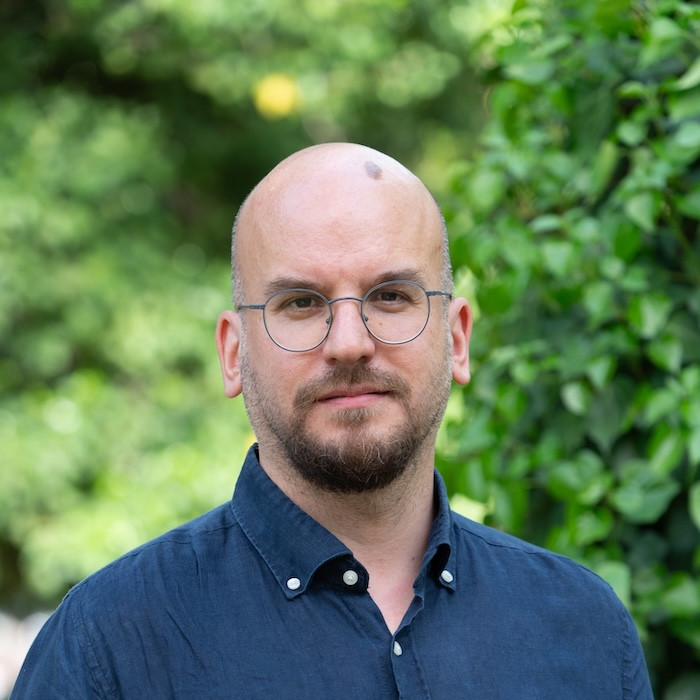
Prof. Mustafa Yücel
Host Institution/country: Middle East Technical University, Türkiye
Grant: ERC Consolidator Grant
Grant duration: 01.01.2023 – 31.12.2027
Grant amount: € 2 399 350
Call: ERC-2021-COG
Domain: PE10
Acronym: DeepTrace
Project in CORDIS
DeepTrace will advance a ground-breaking mechanistic, analytical, and predictive understanding of how the life-supporting metals cycle across Earth’s deep-sea ecosystems
Marine geochemist Mustafa Yücel is developing ways to trace life-supporting metals in Earth’s deep-sea ecosystems, with methods that may also inform the study of oceans elsewhere in the Solar System. DeepTrace succeeded on its first submission – but only after five earlier ERC applications taught him to rethink novelty, risk and persistence.
From Earth’s oceans to the search for life beyond Earth
The floor of Earth’s ocean may seem far removed from the moons of Jupiter and Saturn. For marine geochemist Mustafa Yücel, however, the connection begins with a question that reaches beyond any single discipline: “One of the biggest questions humanity has is where we come from, right? But another enormous question is: are we alone?”
Mustafa’s starting point is the growing scientific interest, described in the interview, in moons that appear to hold large quantities of water beneath ice. Active cores, friction and the gravitational forces exerted by their planets may allow some of that water to remain liquid. To an oceanographer, these are not merely distant astronomical objects. They are other oceans that can be considered alongside Earth’s, at least at the level of basic chemistry.
Earth’s oceans support life and provide conditions for evolution. If oceans elsewhere share some of their basic chemistry, Mustafa argues, that offers a starting point for asking whether they could be habitable. He presents this as an open, partly philosophical question rather than a result. Possibilities about how life might arise or move between planets remain unknown.
The ERC Consolidator Grant project DeepTrace brings that far-reaching curiosity back to a problem that can be investigated on Earth. Its stated aim is to advance mechanistic, analytical and predictive understanding of how life-supporting metals cycle across deep-sea ecosystems. At its core is the development of methods to detect metal-containing nanoparticles in the oceans. Mustafa says these methods could also be used to search for such particles in other planetary oceans wherever those oceans exist.
Developing new methods to tackle scientific challenges
This approach combines ambition with methodological risk. Detecting substances at very low concentrations can demand extreme precision. Mustafa had faced that challenge in an earlier project, where the research question depended heavily on such measurements. DeepTrace does not depend on extremely lowlevel measurement to the same extent, although method development remains central.
The project was the sixth proposal in Mustafa’s ERC journey, but the distinction matters: DeepTrace itself was funded on its first application. His five earlier applications concerned a different project. Some methods overlapped, but the central research question was completely different.
Learning from earlier applications
His record also complicates the language of rejection. “I submitted two Starting Grant applications and four Consolidator Grant applications. They all reached the second stage and received an A score. They were excellent projects, but funding was not available. At one point, I was even on the reserve list. So, calling those earlier applications ‘rejections’ is not entirely accurate.”
Detailed evaluation reports helped him understand what had held the earlier project back. There was a methodological issue: the need for highly precise measurements at very low concentrations. Yet Mustafa does not consider that the decisive weakness. In his reading, panels saw the earlier question as important and worth investigating, but not sufficiently new.
That feedback redirected rather than ended the work. For a Starting or Consolidator Grant, he believes, panels want to see researchers carving out a new niche. An established or decades-old question can still be viable, but the method or approach must then be highly innovative and capable of making real progress. Mustafa took his expertise and some of his methods, developed new ones and applied them to a different question. Looking back, he considers the critical feedback fortunate.
Potential applications from deep-sea research to environmental protection
DeepTrace may also prove useful much closer to home. The same sensitive methods being developed to detect metal-containing nanoparticles in seawater could help researchers assess anthropogenic nanoparticles in coastal environments. Mustafa points to technologies such as phones, screens, batteries and electric-vehicle components as contexts in which metalcontaining nanoparticles are used, with waste eventually entering the environment.
Sunscreens offer another example in the interview. They can contain titanium nanoparticles, and Mustafa says research has found enrichment of these particles on some beaches. Their health effects are not yet fully understood. Before toxicological work or health assessment can proceed, however, the particles must first be detected reliably. DeepTrace’s methodologies could therefore contribute to understanding pollution levels and, potentially, to future regulation. These are possible applications, not outcomes the interview reports as completed.
Finding the confidence to try again
Continuing to apply was emotionally difficult. The evaluation reports were positive, but the ERC had become a dream, making each unfunded result painful. After his second Starting Grant application, Mustafa felt he had failed and feared that moving into the Consolidator Grant eligibility window would make the competition harder. He thought his ERC journey might be over.
Support brought him back. His university’s project support office, his funding agency and his National Contact Point encouraged him to continue.
Their role was not described as rewriting the science, it was to restore momentum when disappointment had made another application difficult to contemplate.
Persistence, however, did not mean resubmitting the same idea unchanged. The crucial learning was to be more ambitious about the scientific question. “I would tell my younger self to be bolder -to think well beyond what already exists in the literature.” That requires time to think, read and connect ideas beyond a researcher’s doctoral and postdoctoral work – time that is difficult to protect amid pressures involving tenure, publications, grants and wider uncertainty.
Following scientific curiosity rather than the panel
Mustafa also challenges applicants’ anxiety about choosing a panel. In his view, panel selection should be one of their later concerns. The first test is whether the idea genuinely goes beyond the state of the art. Rather than trying to reverse-engineer a panel, researchers should think about who will use the results and whether the work can open a new direction.
Some of the most useful prompts may come from people at the beginning of their scientific lives. Mustafa urges researchers to listen to students, interns and undergraduates. At lectures and popular-science events in Türkiye, students asked whether life originated in the oceans. They were concerned about climate change and pollution, but often even more curious about how life begins. Their questions reminded him that a panel is also made up of curious people. A proposal must survive expert scrutiny, but its animating question should still be capable of awakening that human curiosity.
Interview was conducted in August 2026.
Advice for future ERC applicants
- Be bold enough to pursue a question that goes well beyond the existing literature.
- Do not remain confined to the topic of your PhD or postdoctoral work, allow time to think, read and connect ideas.
- Use evaluation reports to distinguish a fixable methodological concern from a deeper problem of novelty.
- If the question is established, make the method or approach highly innovative and show how it can produce real progress.
- Treat persistence as learning and redirection, not automatic resubmission of the same project.
- Seek encouragement from institutional project support, the national funding agencies and the National Contact Point.
- Focus first on an ERC-level idea and who will use the results, worry about panel choice later.
- Listen to the questions asked by students, interns and undergraduates.
- Do not interpret a strong but unfunded assessment as proof that the scientific work has failed.